| | The liverwort genera (Bryophyta: Hepaticae and Anthocerotae) of Britain and Ireland |
Gametophyte. Plants small, usually in dense patches leafy. The stems erect or ascending, often much branched and frequently stoloniferous. Acrogynous. The leaf cells with trigones. Rhizoids present; colourless.
The leafy shoots dorsiventral, with the two ranks of laterals more or less equal in size and the ventral rank lacking, or not dorsiventral, with two equal ranks of similar lateral leaves and ventral leaves lacking (the shoots dorsiventrally compressed or not); julaceous. The vegetative leaves more or less symmetrical. The vegetative leaves more or less transversely inserted, or transversely inserted to obliquely inserted; alternate; closely overlapping (and erect-appressed, totally obscuring the stems); as long as or longer than wide, strongly concave, when shoots secund more or less succubous; emarginate to bilobed (the apices of the lobes often hyaline), or undivided; without vittae. The cells of the gametophyte with numerous small chloroplasts. Gemmae absent.
The plants dioecious.
Male inflorescences terminal, the bracts in several pairs, similar to the leaves but basally saccate, sometimes larger and often less closely imbricated. Male bracts subtending 2 antheridia (these ovoid and short- to long-pedicelled). Female inflorescences terminal. Perigynium absent or vestigial (vestigial, not tubular, after fertilization constituting part of the calyptra, with the sporophyte deeply embedded). Marsupia present but vestigial, or absent (in G. crenulatum). Female bracts present (several pairs, larger than the leaves, the inner sometimes lobed). Perianth usually more or less absent (replaced by connate scales). Calyptra present and well developed (after fertilization bearing unfertilized archegonia).
Sporophyte. The sporophyte elevated by elongation of the seta, with no intercalary meristem. The capsule globose. The capsule wall 2–3 layered. The spores unicellular when shed. Elaters present; attenuate at each end, bispirally thickened, or thickend via 3–4 spirals; free.
British representation. 5 species; England, Wales, Scotland, and Ireland.
Classification. Class/Division Hepaticae. Subclass/Class Jungermanniidae. Order Jungermanniales. Family Gymnomitriaceae.
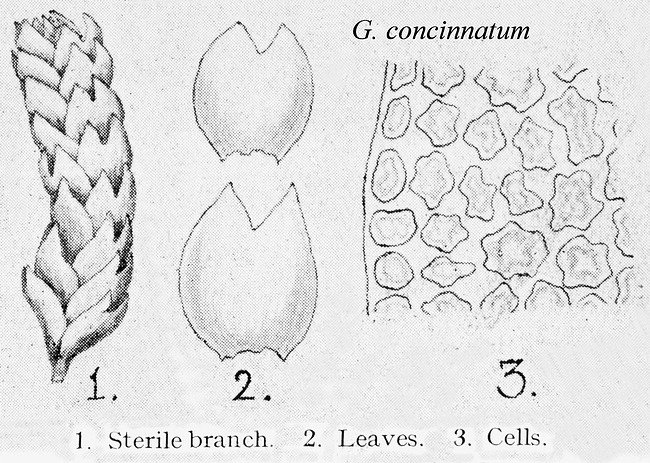
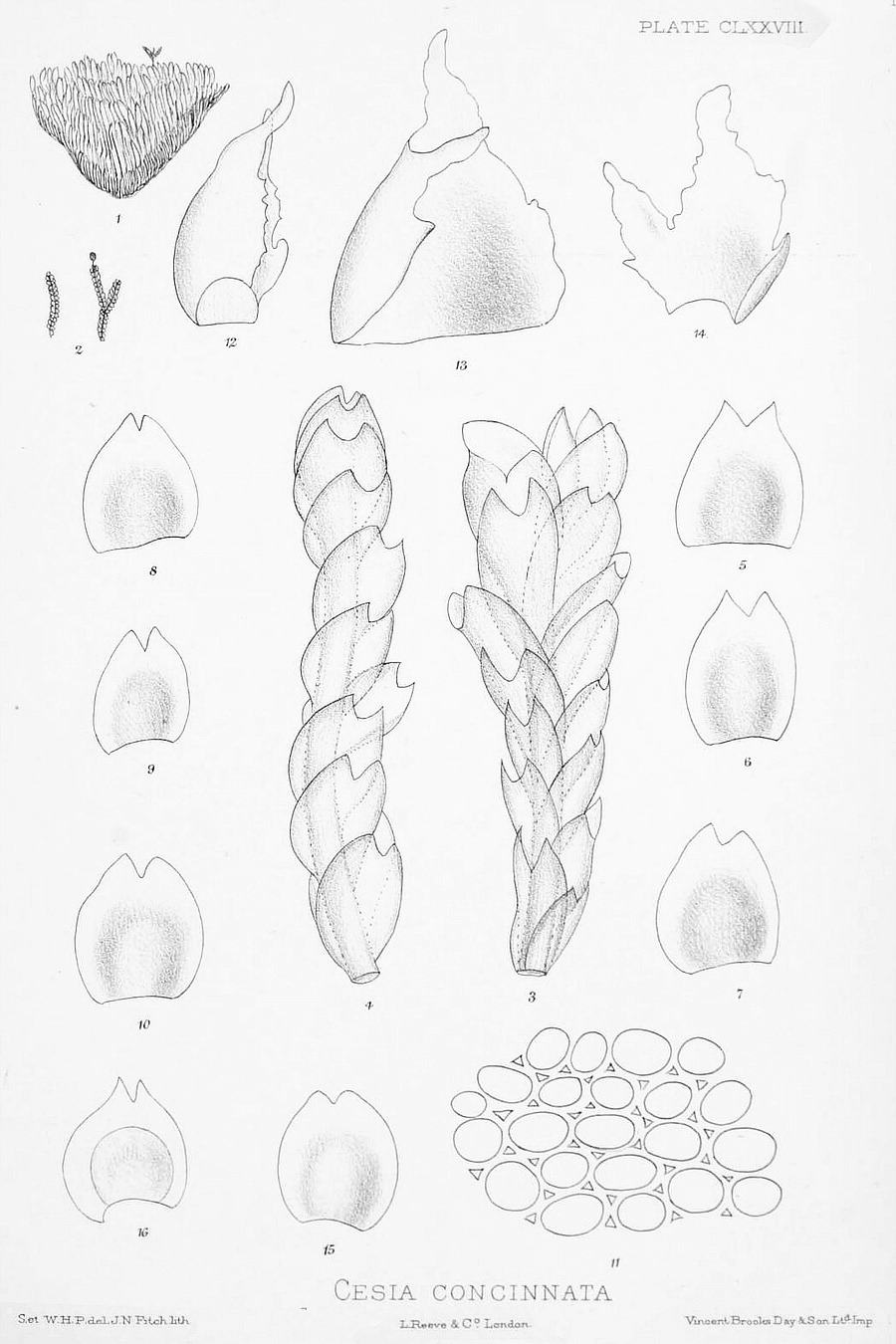
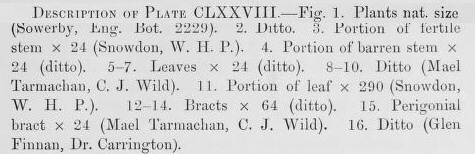
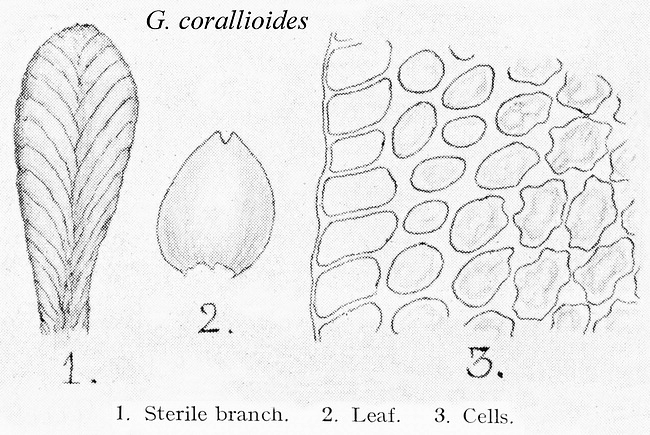
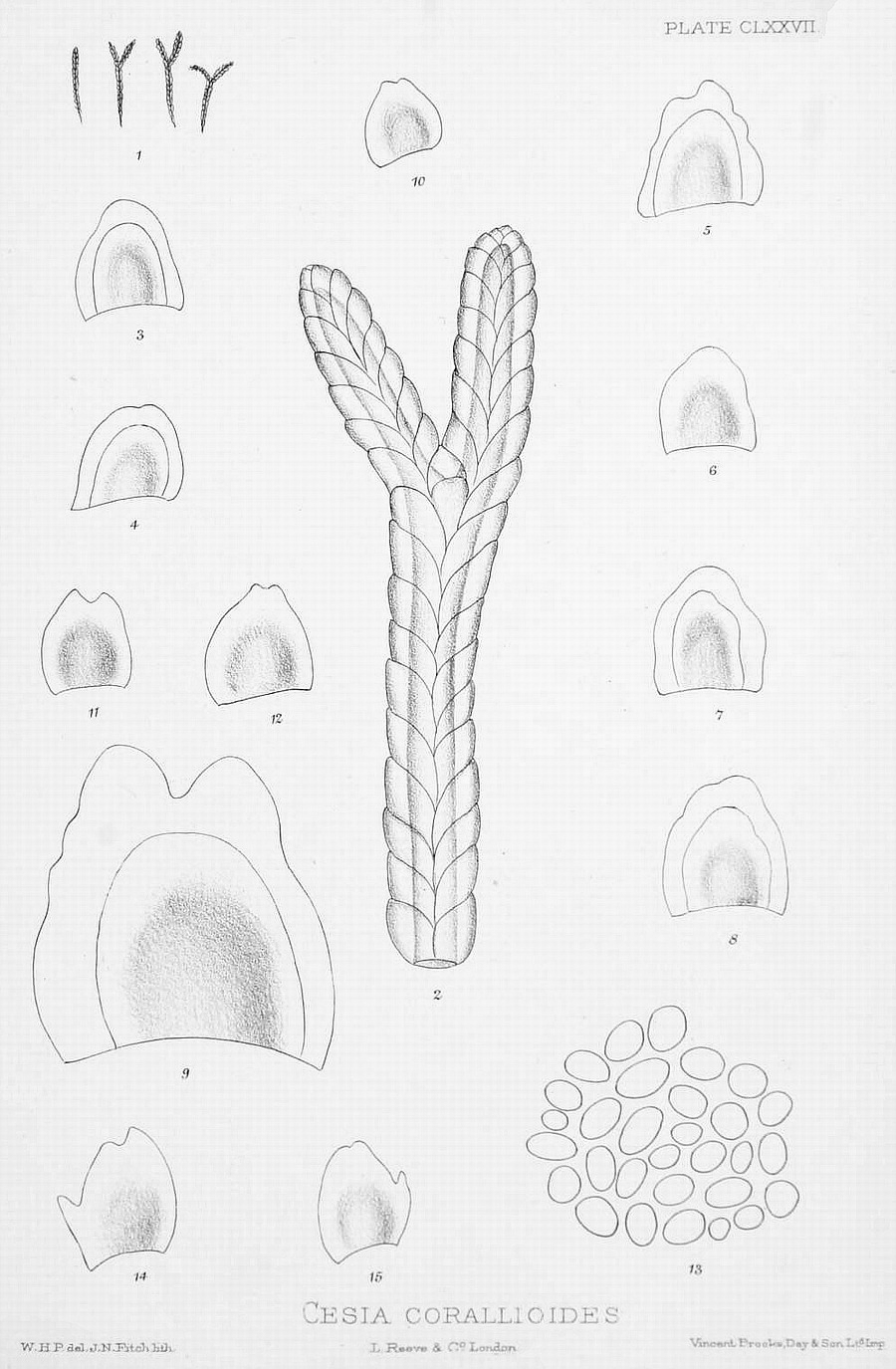
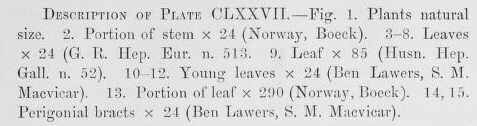
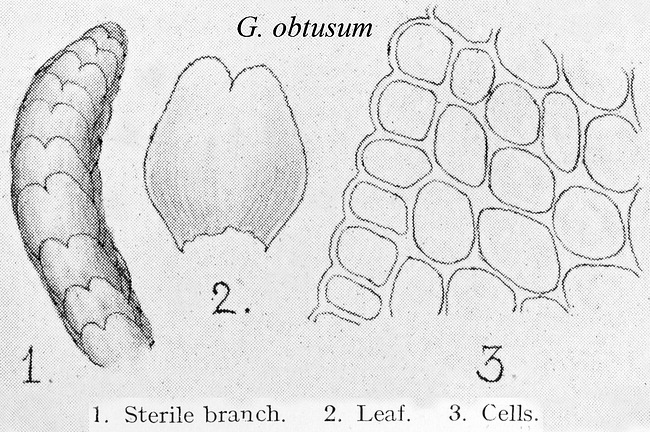
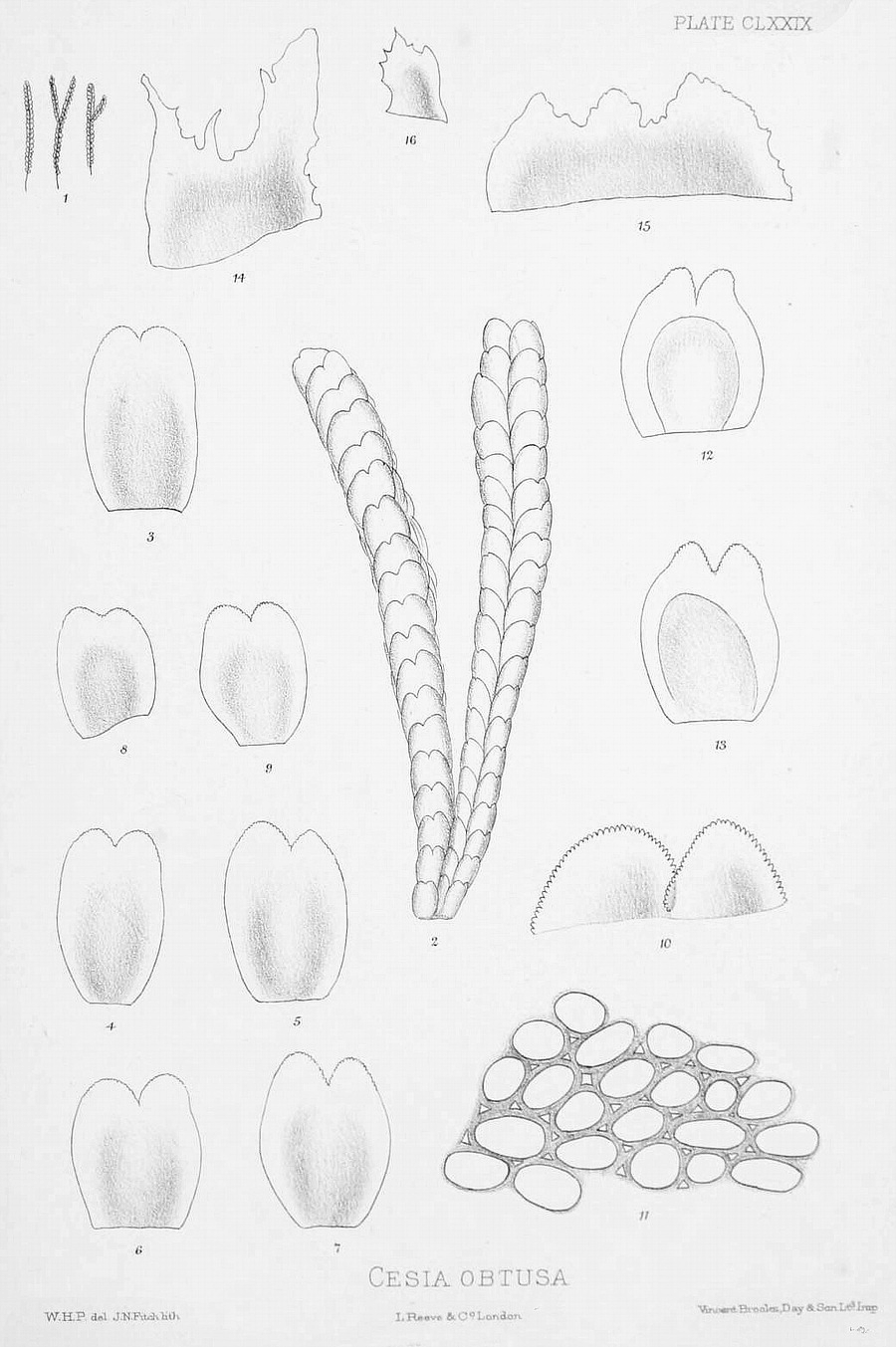
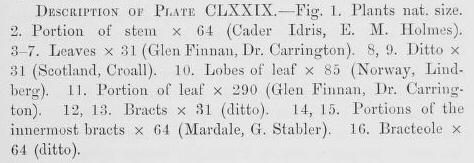
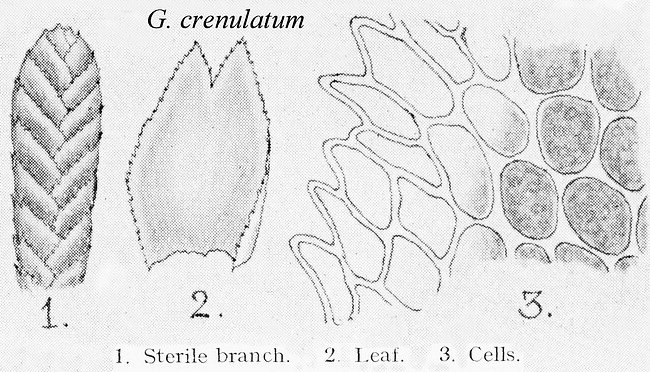
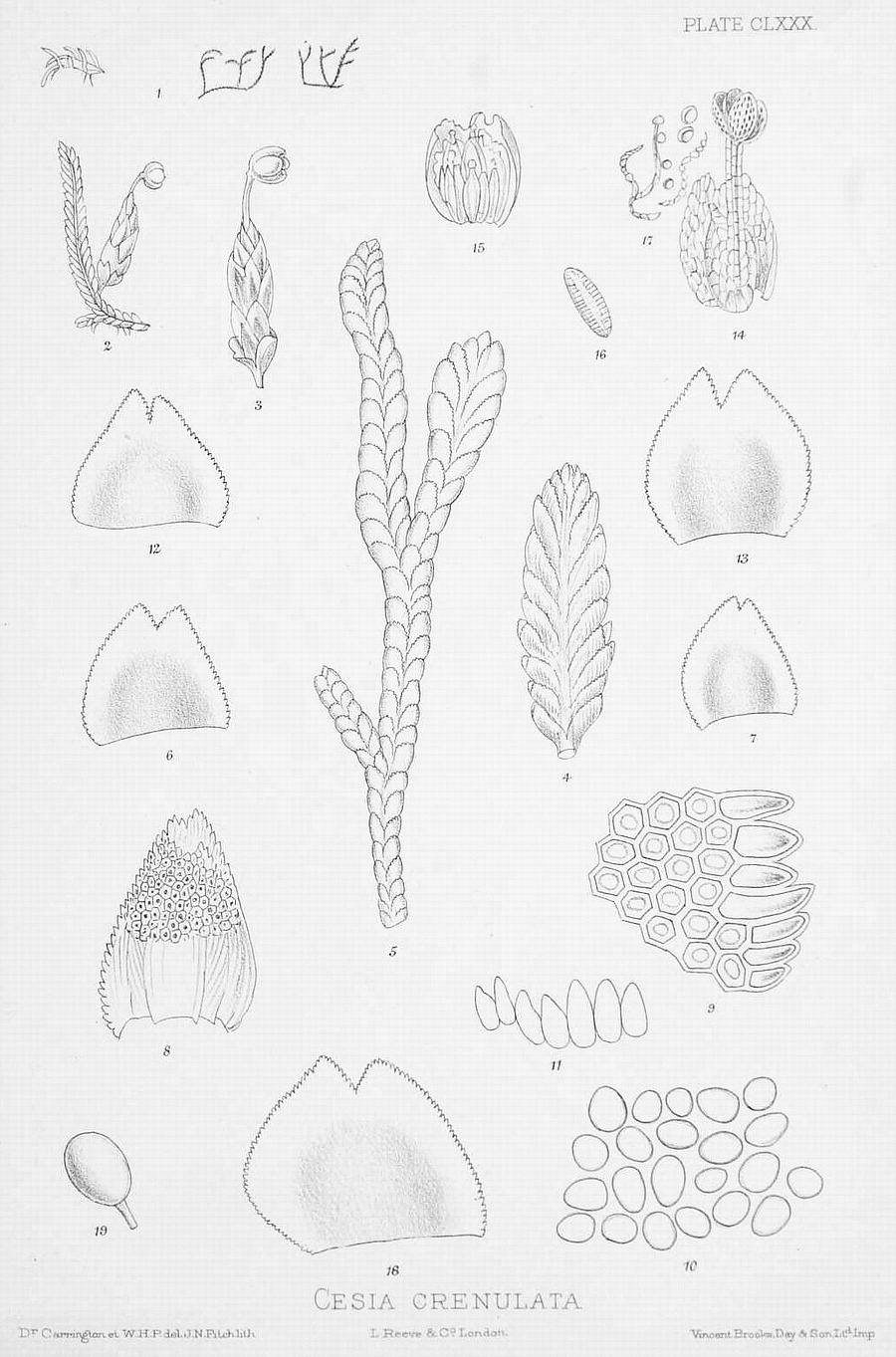
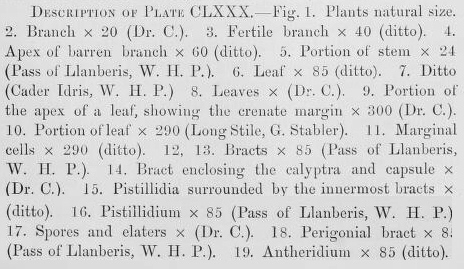
Illustrations. • G. concinnatum: Jameson, in Macvicar (1926). • G. concinnatum (as Cesia): Pearson fig. CLXXVIII (1902). • G. concinnatum (as Cesia): Pearson fig. CLXXVIII legend. • G. corallioides: Jameson, in Macvicar (1926). • G. corallioides (as Cesia): Pearson fig. CLXXVII (1902). • G. corallioides (as Cesia): Pearson fig. CLXXVII legend. • G. obtusum: Jameson, in Macvicar (1926). • cf. G. obtusum (as Cesia): Pearson fig. CLXXIX (1902). • cf. G. obtusum (as Cesia): Pearson fig. CLXXIX legend. • G. crenulatum: Jameson, in Macvicar (1926). • G. crenulatum (as Cesia crenilata): Pearson fig. CLXXX (1902). • G. crenulatum (as Cesia crenilata): Pearson fig. CLXXX legend.
We advise against extracting comparative information from the descriptions. This is much more easily achieved using the DELTA data files or the interactive key, which allows access to the character list, illustrations, full and partial descriptions, diagnostic descriptions, differences and similarities between taxa, lists of taxa exhibiting or lacking specified attributes, and distributions of character states within any set of taxa. See also Guidelines for using data taken from Web publications.
Cite this publication as: ‘Watson, L., and Dallwitz, M.J. 2005 onwards. The liverwort genera (Bryophyta: Hepaticae and Anthocerotae) of Britain and Ireland. Version: 5th August 2019. delta-intkey.com’.